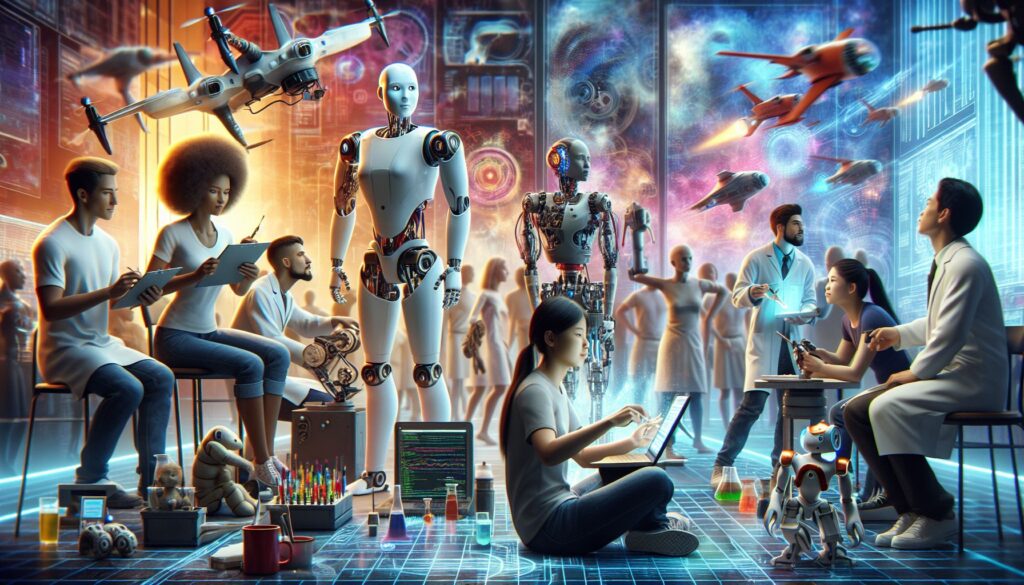
Hey tech enthusiasts! Today, I’m super excited to talk about a topic that’s been sparking imaginations since the early days of science fiction: robotics! We’re now in a time when robots aren’t just dreams of the future but a reality unfolding in front of us. They’re moving out of factories and labs and into our everyday lives—think Rosie from “The Jetsons,” but even cooler and less, well, cartoonish.
The Robots Are Here: A Quick Intro
Remember how we used to joke about having a personal robot by 2020 back in the ’90s? Well, that moment has arrived, just a few years later than expected. Today’s robotics are designed to assist, entertain, and even inspire us. We’re talking drones that deliver packages, robots performing surgery with superhuman precision, and even bots creating art. It’s not just about the heavy-duty bots on assembly lines anymore. Now, it’s about robotics making our lives better in ways we never expected.
What’s Happening Right Now?
Consumer Robotics
The most visible trend is the rise of consumer robotics. Whether it’s Roomba robots vacuuming our floors or Aibo robots providing companionship, these machines are becoming part of our homes and everyday routines. And yes, they can make our lives significantly easier, though you’ll sometimes wish for a remote control to speed them up a bit when you’re in a hurry!
Industrial Revolution… 4.0?
We often hear people mention the “Fourth Industrial Revolution,” and robotics is at the heart of this transformation. Advanced robotics systems are increasing efficiency in industries ranging from agriculture to manufacturing. These robots work around the clock, never take sick days, and handle hazardous tasks that you’d probably rather avoid anyway. Think of it as both job upgrading and job saving because robots can handle the jobs humans physically can’t—or shouldn’t.
Surgery Like You’ve Never Seen
And then, there’s the incredible work being done in surgery with robotic assistance. Robotic arms controlled by surgeons can make incisions more precise than a human hand ever could. This reduces recovery times and improves patient outcomes. These systems, like the da Vinci Surgical System, have turned what might once have been complicated, risky surgeries into routine procedures.
The Big Questions: What’s Next?
Will Robots Take Over Our Jobs?
Here’s the biggie—probably the question I get asked the most: Are robots going to steal our jobs? Well, let me break that down. Sure, some tasks traditionally done by humans will be automated, but remember, we’re also witnessing the creation of new roles. Robots need maintenance, programming, and innovation, all tasks that are currently very human-centric. Plus, as we’ve seen with technological advances throughout history, automation often leads to a more prosperous society overall as long as we adequately prepare for transitions.
Making Robots More Human-Friendly
One interesting part of bringing robots into our lives is making them, well, a bit more human-friendly. This doesn’t mean they all need to look humanoid, but there’s a push towards designing robots with appearances or behaviors that are reassuring rather than unsettling. It’s less about making an anthropomorphized 3PO and more about creating tools that fit into our world—both physically and emotionally.
The Ethics of Robotics
We can’t chat about the rise of robotics without touching on ethics. How do we ensure robots are used responsibly? From privacy concerns with surveillance drones to the implications of automating military drones, we’re at a crossroads where ethical considerations need to catch up with technological capability. Institutions and policymakers are working hard on guidelines, and this is a conversation that will continue to evolve as robotics technology progresses.
Looking Ahead: The Speculative Future
Okay, let’s indulge in a bit of speculation. What might the next 10 or 20 years look like with robotics at our side? Think robotic assistants designed to enhance education by providing customizable learning experiences, or robots that can facilitate elderly care by offering both physical support and companionship. Imagine autonomous vehicles reducing traffic accidents dramatically or robotic exoskeletons enhancing human capabilities in ways that open up job opportunities for those previously unable to work certain types of jobs.
And let’s not forget the exploration of space—robotics is key to missions where sending humans would be too risky or currently impossible. NASA’s Martian rovers are just the beginning of this autonomous exploration where the final frontier isn’t as lonely when bots are around to scout the way.
Conclusion: The Robotic Renaissance
In this rapidly changing field, we’re witnessing a robotic renaissance where our machines aren’t just tools but partners that expand what’s possible. Only a few decades ago, robotics seemed like a distant dream. Now they’re everyday marvels reshaping our world in ways our grandparents would’ve deemed pure science fiction.
With all these changes on the horizon, we’re continuing to write our own story of human-robot interaction. So, here’s to embracing our mechanical marvels and looking ahead to what’s coming next. Keep dreaming, keep tinkering, and let’s ride this wave of innovation together. Cheers to the future, folks—it’s shaping up to be quite an adventure!
Feel free to chime in with your thoughts below, or shoot over any cool robotics stories you’ve come across. I’m always eager to hear about what’s happening out there in the world of cutting-edge tech!